 For years, your leadership team was working and collaborating well, and then something changed. Maybe a leader came under intense pressure to perform against new metrics. Maybe the team stopped meeting deadlines because they had to cut staff and were operating too lean. Maybe there were too many changes happening at the same time and priorities kept shifting. Maybe something happened internally that broke the alignment and they stopped trusting each other. Or maybe some of your top leaders started to retire, new people were promoted, they didn’t align, and that eventually caused friction and a breakdown in trust.
The leadership teams that are aware of the financial, emotional, and reputational impact of a misaligned team and do something about it are the ones that make the biggest gains. They also have the greatest impact on the organization while maintaining a high level of engagement.
Much of my work this year has been helping leadership teams have the difficult conversations they’ve been avoiding and agree on how they’ll run the department and work differently together going forward.

What Are the Signs of Misalignment?
In the actual words of my clients, and in the themes I’m seeing through my work with leadership teams struggling to maintain trust, alignment, and accountability, the issues often sound like this:
“Priorities keep moving.”
“Ask me the question before you make the decision.”
“Bring me into the conversation before the work breaks down.”
“Listen to what I have to say.”
“We are adults. Please treat us like adults.”
“We’re pretty good at what we do. There are things that can be done better. But this is a high-functioning executive team.”
And this is what makes misalignment easy to miss. The team may still be performing. Revenue may still be growing. People may still like and respect each other. The problems often show up long before anyone would describe the team as dysfunctional.
Decisions take longer. The same issues keep coming back. Leaders solve problems within their own functions. People become more careful about what they say in meetings. The organization begins compensating for the leadership team’s misalignment before the leadership team realizes how much it is costing them.
Underneath those statements are the patterns I’m seeing:
- Increased internal and external pressure
- Changing priorities often caused by fluctuating customer needs and volatile markets
- Increased demands to incorporate AI into existing work systems
- Avoidance of difficult conversations
- Department silos
- Lack of accountability
- Leadership transitions caused by retirements, scaling, or shifting department needs
Over time, these issues can lead to a gradual erosion of trust and even a loss of the fun and levity the team once had.
Why Does Trust Start to Erode?
What I have found in my work with leadership teams is that trust rarely breaks down because of one big event. More often, something has been happening for a while and either the team hasn’t recognized the impact or they have avoided talking about it directly.
By the time they do, some have formed opinions, made assumptions, changed the way they communicate with one another, and started working around the problem instead of addressing it.
Are Side Conversations Undermining Decisions and Trust?
One of the first things I pay attention to is where the real conversations are happening. This happens in Discovery when I actually meet and have conversations with everyone on the leadership team confidentially.
Sometimes they know something isn’t working, but no one is saying it directly. Or they are talking about it, just not with the person they need to be talking to. The meeting ends and the real conversation happens afterward. People call each other, stop by someone’s office, or have a separate conversation about what was just discussed.
Side conversations start replacing direct conversations, and assumptions get made about intent. Then, decisions get revisited or even ignored, and frustration starts building. And because the team is still functioning, it can be easy to let it go.
What Is the Cost of Misalignment?
The impact of a leadership team that is no longer working well together doesn’t stay within the leadership team. It starts showing up in how decisions get made, how quickly work gets done, how people communicate, how the employees react, and ultimately in the performance of the organization.
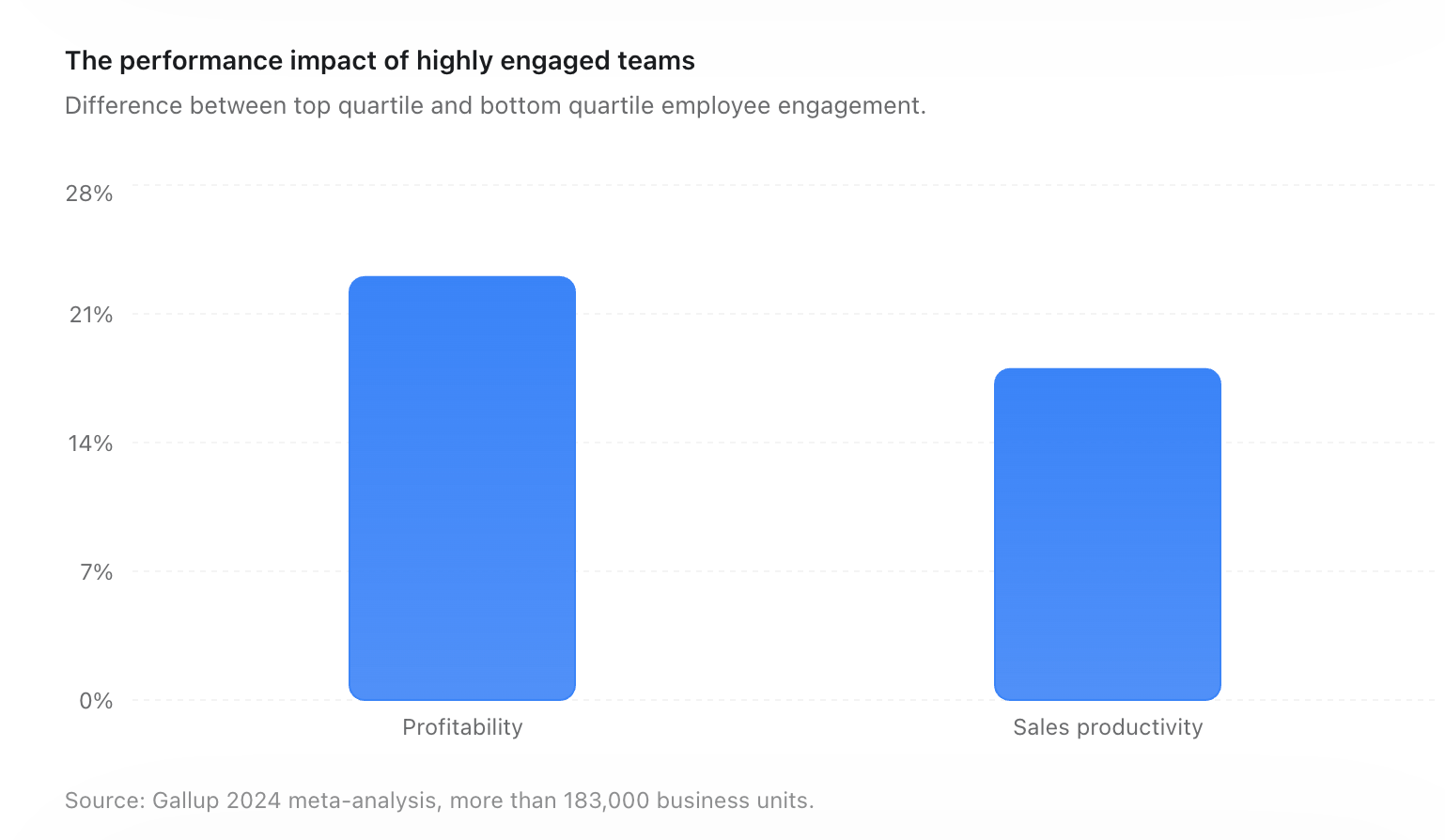
The research backs this up. Gallup’s 2024 analysis of more than 183,000 business units found that highly engaged teams had 23% higher profitability and 18% higher sales productivity than teams with low engagement. Gallup also estimates that managers account for at least 70% of the variance in team engagement.
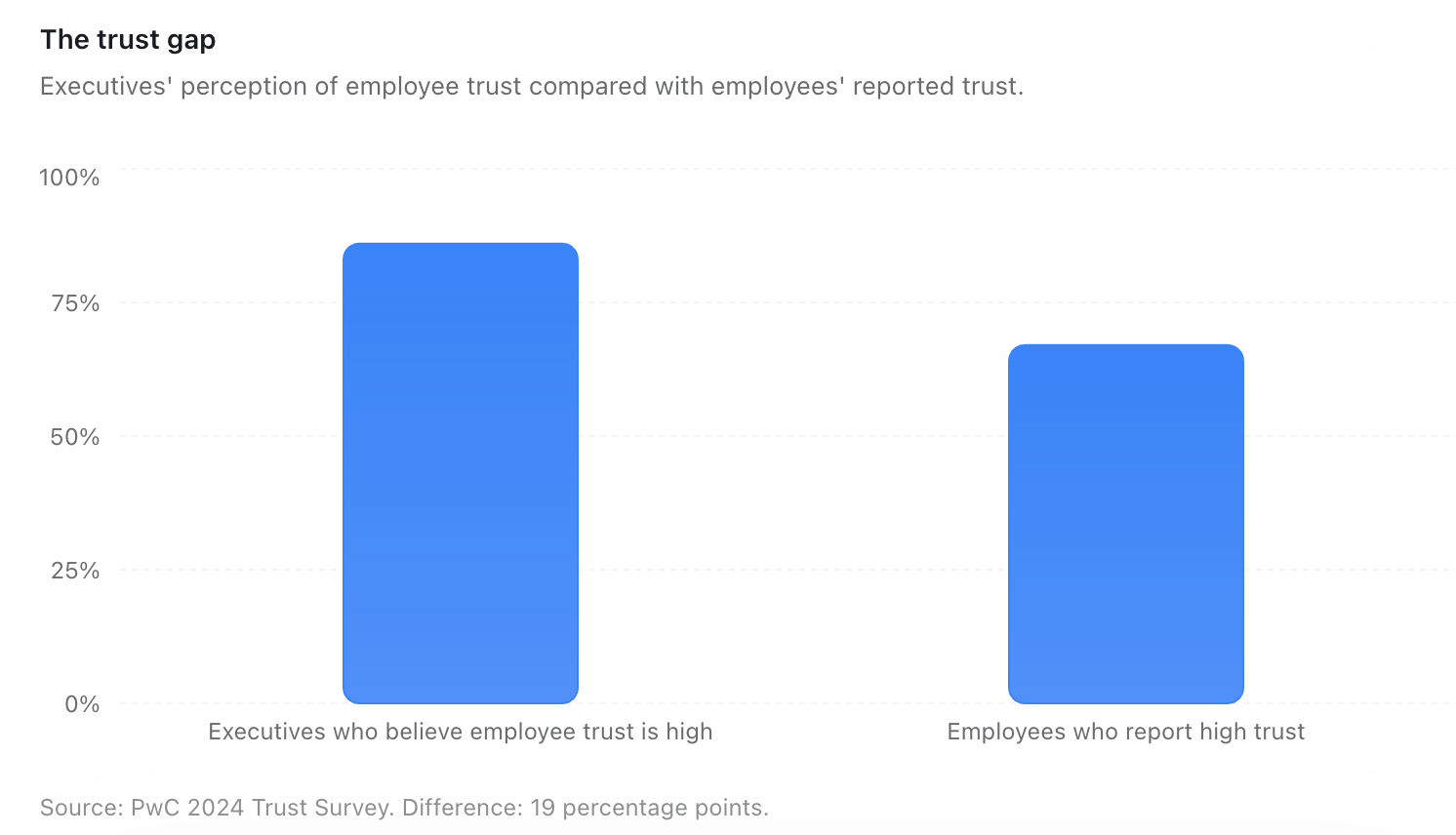
Trust matters too. In PwC’s 2024 Trust Survey, 93% of executives said that building and maintaining trust improves the bottom line. Yet there is a significant disconnect between what executives believe and what employees experience. While 86% of executives believed employee trust was high, only 67% of employees said they highly trusted their employer.
When I start hearing things such as “Priorities keep moving,” “Why are we having this same conversation again?” or “Ask me the question before you make the decision,” I pay attention.
Those comments may sound like individual frustrations, but taken together, they can be early signs that the way a leadership team works together is starting to break down.
What Conversations Is Your Leadership Team Avoiding?
It isn’t enough to know that trust has eroded or that the team isn’t working together the way it used to. The team needs to understand what changed, what isn’t working now, and the impact it is having on the rest of the organization.
That means getting the real issues on the table. It means talking about the things people have been discussing outside the meeting. It means being willing to hear how your behavior may be contributing to the problem, even when your intent was very different.
And then the team needs to decide what it is going to do differently.
How Do We Get to the Root of the Problem?
Before I bring a leadership team into the room together, I meet confidentially with each leader. I want to understand what they believe is working, what isn’t, what they aren’t saying to each other, and where they believe the team is getting stuck. Those conversations often reveal very different versions of the same problem.
My job isn’t to decide who’s right. It’s to identify the patterns underneath those different perspectives and get the team talking about the issues that are affecting how they work together.
Why Isn’t There More Change After an Offsite?
It isn’t realistic to expect a leadership team to change the way it works together after one day. The offsite can surface the issues, create clarity, and help the team agree on what needs to change. But the real work happens afterward.
People have to practice having the conversations they used to avoid. They have to catch themselves when they fall back into old patterns. They have to speak up when agreements aren’t being followed and hold each other accountable for what they said they would do.
The goal isn’t to leave the room feeling better about each other. The goal is to leave with clarity about how decisions will be made, how disagreements will be handled, what each leader is accountable for, and how the team will work together going forward. This happens slowly and with commitment from everyone to step up and speak up when they need to.
Because the success of this work isn’t measured by what happens in the room. It’s measured by what the team is doing differently over the course of 30, 60, and 90 days.
About Stephanie Wachman, CEO
Stephanie Wachman is the CEO of Symetree Strategies, where she advises law firms and executive teams on leadership, culture, strategy, and change. Over the past 15 years, she has worked with law firms in 23 countries and speaks internationally on leadership, partner development, mentoring, and business development. She is the author of OWN Your Time and Sell Without Being Salesy.