Pennsylvania's proposed false claims legislation would allow private citizens to bring lawsuits on behalf of the government against individuals or entities alleged to have defrauded public programs. The PICPA is concerned this would permit private parties to bring suits involving state and local tax matters.
 Tucked into Gov. Josh Shapiro’s 84-minute budget address on Tuesday, Feb. 3 (on pages 24 and 25 of his 34-page prepared remarks, to be exact) was a renewed call for the General Assembly to enact a Pennsylvania False Claims Act (FCA).
The governor urged lawmakers to adopt the measure as an additional tool to combat fraud:
“To protect our kids and our seniors, we need to make sure every dollar we appropriate for their benefit goes to them and doesn’t get fleeced from the system. … In 2024, Pennsylvania charged 119 cases of Medicaid fraud and recovered more than $11 million. … We can build on those strong safeguards … by finally passing a False Claims Act in Pennsylvania. … Let’s finally get it done.”
The False Claims Act (FCA) – often referred to as the “Lincoln Law” – is a whistleblower statute that allows private citizens, known as relators, to bring lawsuits on behalf of the government against individuals or entities alleged to have defrauded public programs. Supporters argue that a state FCA would strengthen Medicaid fraud enforcement and generate additional recoveries for the commonwealth.
The PICPA has serious reservations.
Federal Enforcement Already Exists
One concern is that Pennsylvania already operates under the federal False Claims Act, which is the primary mechanism used to recover misspent Medicaid dollars. Because most FCA cases involve Medicaid, the federal statute already provides significant enforcement authority and allows the commonwealth to receive its share of recovered funds.
Serious Tax Concerns
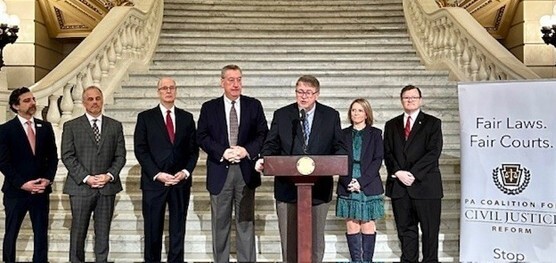
One bill that falls under the FCA umbrella passed the Pennsylvania House last July. House Bill 1697, sponsored by Rep. Frank Burns (D-Cambria), would permit private parties to bring FCA-style lawsuits involving state and local tax matters, not just Medicaid and other fraud.
As passed, the bill represents a significant departure from long-standing tax administration norms, introducing substantial legal and compliance uncertainty for taxpayers and the CPAs who advise them.
“We are deeply concerned by this proposal and will be working aggressively to make the administration and state lawmakers aware of PICPA’s reservations with the bill as currently written,” said Jennifer Cryder, CPA, CEO of the PICPA. “Tax enforcement has traditionally been the responsibility of the Department of Revenue, which is best equipped to ensure laws are applied consistently and fairly.”
Tax Is a Government Function
Pennsylvania’s tax code is complex and frequently requires professional judgment and interpretation. CPAs work closely with both taxpayers and the Department of Revenue to ensure compliance in good faith, often under ambiguous statutory provisions.
Tax enforcement is fundamentally a governmental responsibility. It involves confidential taxpayer information, discretionary determinations, and policy-based decisions entrusted by law to the Department of Revenue.
Permitting private litigants – motivated by potential financial gain – to pursue tax enforcement actions risks numerous adverse outcomes:
-
Inconsistent interpretations of tax law
-
Duplicative or abusive litigation
-
Conflicting legal outcomes
-
Significantly higher compliance costs for businesses
-
Unpredictable liability for taxpayers and practitioners
“Allowing private litigants to pursue tax-related claims could lead to abusive litigation and increased compliance costs,” Cryder says. “It would also expose taxpayers and CPAs to unpredictable liability risk, even when tax positions are reasonable and well supported.”
PICPA Urges a Tax Exclusion
If lawmakers consider false claims legislation as part of fiscal year 2026–2027 budget negotiations, the PICPA strongly urges that state and local tax matters be expressly excluded.
The federal False Claims Act and most state FCA statutes explicitly carve out tax issues, reflecting a broad national consensus that tax compliance should be administered by revenue agencies, not private litigants.
If House Bill 1697 advances in its current form, Pennsylvania would break from that consensus and create an unpredictable tax environment that could place the commonwealth at a competitive disadvantage.
Sign up for PICPA's weekly professional and technical updates by completing this form.