
Pennsylvania CPA Journal
The One Big Beautiful Bill Act provides companies with an opportunity to create significant tax deductions through bonus depreciation. But some difficult decision may have to be made.
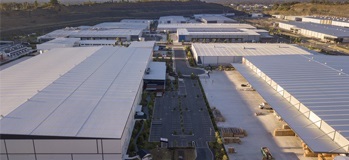 Recent changes to bonus depreciation under the One Big Beautiful Bill Act (OBBBA) of 2025 allow companies an opportunity to create significant tax deductions, not just for this tax year but for future years as well. But, as with all things, certain qualifications must be met to maximize these benefits.
Return of 100% Bonus Depreciation
The OBBBA permanently reinstated 100% bonus depreciation on qualified property. In the case of any qualified property, the depreciation deduction provided by IRC Section 167(a), for the taxable year in which such property is placed in service, shall include an allowance equal to 100% of the adjusted basis of the qualified property.1 “Qualified property” is defined as property that has a recovery period of 20 years or less.2 The original use of qualified property must begin with the taxpayer or, if acquired, must not have previously been used by the taxpayer prior to the acquisition.3 The property must be placed in service after Jan. 19, 2025, to qualify for the reinstated bonus depreciation. There is also an option to elect 40% (or 60%) bonus depreciation rather than 100%.4
Qualifying Production Property
One of the new items in the OBBBA is 100% bonus depreciation for production property that did not previously qualify because it has a 39-year useful life. The bonus depreciation treatment for this property, however, is temporary and has a list of criteria that must be met.
Qualified production property is defined as nonresidential real property used as an integral part of a qualified production activity placed in service in the United States, its original use commences with the taxpayer, the construction of which begins after Jan. 19, 2025, and before Jan. 1, 2029, and is designated by the taxpayer and placed in service before Jan. 1, 2031.5 The property must not be subject to the alternative depreciation system, but rather be subject to modified accelerated cost recovery system (MACRS) depreciation.
Qualified production property cannot include real property that is unrelated to the manufacturing, production, or refining of tangible personal property.6 Qualified production activity means the manufacturing, production, or refining of a qualified product.7 It is important to be aware that qualified production property is subject to the recapture rules under IRC Section 1245. If at any point within 10 years of the placed-in-service date the property no longer is an integral part of a qualified production activity or if it is sold, it would be subject to recapture rules – the property will be treated as having been disposed of on the date the property first was not an integral part of production activity.8 The depreciation benefits will be reclaimed as ordinary income.
Accelerated Deduction Implications
The idea of increasing current year tax deductions is appealing to most businesses, but sometimes it can be a detriment to longer-term plans.
A company that is incurring losses in the current year but is forecasting future income would want to try and delay tax deductions. The company might want to opt out of bonus depreciation or push off certain capital expenditures. It might be more beneficial to delay depreciation deductions rather than creating or increasing net operating losses because they are limited to 80% of taxable income usage for tax years after 2017.
Alternatively, those with taxable income who anticipate a continuation in future years may want to accelerate deductions, such as ramping up capital expenditures to receive the cost deduction. If on the fence about certain capital projects, now might be the time to move forward since it will result in immediate expensing from a tax perspective.
Accelerated depreciation deductions will also have an impact on other tax calculations. Interest expense limitations under Section 163(j) now include tax depreciation and amortization in the calculation of adjusted taxable income. If a company has a large interest expense limitation, accelerated depreciation deductions could increase the adjusted taxable income, potentially allowing them to deduct more interest expense.
A company may need to model out the impact of permanent versus temporary tax deductions. Foreign-derived deduction eligible income (FDDEI) is a permanent tax benefit that is limited based on taxable income. Taking the 100% bonus depreciation could reduce or eliminate the ability to claim FDDEI. A company needs to evaluate which option is more beneficial – a larger permanent FDDEI deduction or taking 100% bonus depreciation in the current year but possibly limiting or eliminating the ability to take FDDEI.
Conclusion
The restoration of 100% bonus depreciation allows businesses to fully deduct capital investments in the year they are placed in service. This may effect numerous tax calculations and should be fully modeled to determine which strategy will produce the most meaningful impact from a tax and business perspective.
1 IRC Code Section 168(k)(1)
2 IRC Code Section 168(k)(2)(A)(i)
3 IRC Code Section 168(k)(2)(A)(ii)
4 IRC Code Section 168(k)(10)
5 IRC Code Section 168(n)(2)(A)
6 IRC Code Section 168(n)(2)(C)
7 IRC Code Section 168(n)(2)(D)
8 IRC Code Section 168(5)(A)(i)
Sonnonedria Miller, CPA, is a director, tax, with Global Tax Management in Wayne. She can be reached at smiller@gtmtax.com.